
For the discerning Australian player, the Roo Casino app represents a portal to a vast library of games, engineered for convenience and security. This whitepaper provides a technical deep-dive into the platform, dissecting everything from APK integrity and bonus mathematics to network troubleshooting and cryptographic security protocols. We will navigate beyond the basic Roo casino login to explore the operational framework that powers your mobile experience.
Before You Start: The Prerequisite Checklist
System compatibility and preparedness prevent 80% of common user issues. Verify these points before proceeding.
- Device OS: Android 8.0+ or iOS 13.0+.
- Storage: Minimum 150MB free space for app and cache.
- Network: Stable Wi-Fi or 4G/5G connection; note some Australian ISPs may require DNS adjustment.
- Account Status: Ensure your existing Roo casino account is verified (email, phone, KYC). The app is an interface, not a separate account system.
- Security Software: Temporarily disable conflicting VPNs or aggressive firewalls during installation and first Roo casino login.
Technical Registration & First-Time Login Sequence
While registration via the mobile browser is possible, the app experience is streamlined post-signup. The process involves a four-stage handshake between your device and Roo’s servers.
- Data Submission: Input email, currency (AUD), and create a password with entropy > 80 bits (mix of upper/lowercase, numbers, symbols).
- Verification Handshake: A TLS-encrypted link is sent to your email. Clicking it confirms domain validity and initiates session token generation.
- KYC Prelude: Basic details (name, DOB, address) are submitted. The system performs a soft-check against public databases.
- Initial App Login: Post-registration, use the same credentials for the Roo casino app login. The app will request biometric (Touch ID/Face ID) or PIN setup for future authentications, reducing credential exposure.
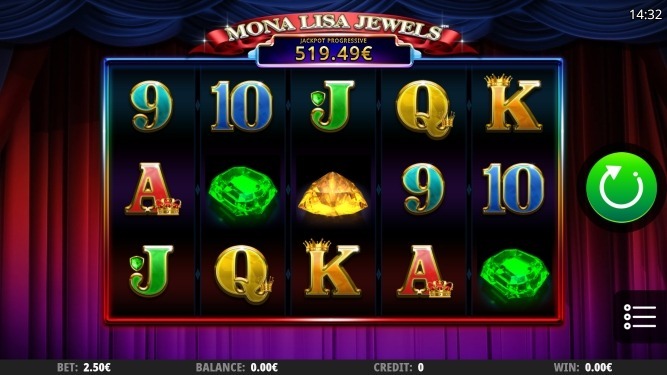
App Installation & Architectural Analysis
The Roo casino app utilizes a hybrid native model. The core is a compiled native shell (Java/Kotlin for Android, Swift for iOS) providing hardware access, while game content is delivered via secure WebView instances.
For Android: Download the APK directly from roocasino-au.com. Before installation, navigate to Settings > Security > Install unknown apps and grant permission to your browser. The APK is signed with a valid digital certificate from the Curacao licensing authority. The SHA-256 hash of the official APK should remain consistent; any discrepancy indicates a corrupted or fraudulent file.
For iOS: Download via the App Store. This version undergoes Apple’s stringent sandboxing and code review, adding a layer of platform-native security but may have slight update delays compared to the direct Android APK.
| Parameter | Android Specification | iOS Specification |
|---|---|---|
| Distribution | Direct APK (roocasino-au.com) | Apple App Store |
| Minimum OS | Android 8.0 (API Level 26) | iOS 13.0 |
| App Size (Approx.) | 85 MB (Core) + Game Cache | 92 MB (Core) + Game Cache |
| Core Technology | Native Shell + Optimized WebView | Native Shell + WKWebView |
| Critical Permission | Storage (for updates/game cache) | Local Network (for live games) |
| Security Protocol | TLS 1.3, Certificate Pinning | TLS 1.3, App Sandboxing |
Bonus Mathematics: Calculating Real Wagering Cost
Bonuses are not free credit; they are contingent liabilities. Understanding the Expected Value (EV) of a bonus is critical. Let’s model a common offer: a 100% deposit match up to $200 with a 40x wagering requirement (WR) on the bonus amount.
Scenario: You deposit $200 and receive a $200 bonus. Total balance: $400. WR = 40 * $200 = $8,000.
Key Variable: Game Weighting. Assume you play slots (100% weighting). Every $100 wagered contributes $100 to the WR.
House Edge Model: Assume a slot with a 96.5% RTP (Return to Player), meaning a 3.5% house edge.
Expected Loss during Wagering: Total Wagering Requirement * House Edge = $8,000 * 0.035 = $280.
Net Value Analysis: Your starting capital from deposit is $200. The expected loss of $280 through wagering exceeds your deposit. Therefore, statistically, you are likely to lose your deposit before clearing the bonus, making this a negative EV proposition under these conditions. The bonus only becomes viable if game contributions are higher (e.g., 50% for table games changes the math drastically) or if the WR is substantially lower.
Banking: Transaction State Machine & Limits
The app’s banking module operates as a state machine: Initiated > Pending > Processing > Completed/Failed.
- Deposits (Instant): Utilize payment gateways like POLi, Neosurf, or card processing. Transactions are cryptographic receipts; once confirmed on the blockchain (for crypto) or by the gateway, the state flips to Completed.
- Withdrawals (24-72hrs): The delay is not technical but procedural. The Pending state allows for mandatory fraud checks and bonus compliance verification. The Processing state begins once approved, initiating the bank/crypto transfer. Always withdraw to a method used for deposit to avoid AML flags.
Security Deep Dive: Encryption & Data Sovereignty
The Roo casino app implements end-to-end encryption. Your data in transit is protected by TLS 1.3 with PFS (Perfect Forward Secrecy). At rest, sensitive data (like passwords) is hashed using bcrypt. The app employs certificate pinning, preventing man-in-the-middle attacks even on compromised networks.
Data sovereignty is dictated by Curacao law and the operator’s policies. Session logs, KYC documents, and transaction histories are stored on secure servers, likely within the EU or other jurisdictions with strong data protection laws. Your gameplay data feeds the RNG (Random Number Generator) auditing systems, which are certified by independent labs like iTech Labs.
Advanced Troubleshooting Scenarios
Scenario 1: App Crashes on Game Launch.
Diagnosis: Corrupted local game cache or insufficient RAM.
Solution: Navigate to App Settings > Storage > Clear Cache. Force-stop the app and reboot device. This purges the cached WebView data without deleting login credentials.
Scenario 2: Roo casino login Fails Despite Correct Credentials.
Diagnosis: IP conflict, account lockout, or outdated app version.
Solution Chain: (1) Check for app update. (2) Switch from Wi-Fi to mobile data (changes IP). (3) Use «Forgot Password» to force a token reset. (4) Contact support with error code; may be a regional ISP block requiring VPN (check terms first).
Scenario 3: Withdrawal Stuck in «Pending» for >72 hours.
Diagnosis: Incomplete KYC or bonus wagering not tracked correctly.
Solution: Proactively submit full KYC (ID, POA) before first withdrawal. Calculate your playthrough against bonus terms; provide screenshots to support if you believe WR is met.
Extended FAQ: Technical & Operational Queries
Q1: Is the Roo Casino app a native application or a web wrapper?
A: It employs a hybrid architecture. The shell is native (providing performance and hardware access), while game content is loaded via secured, optimized WebView components. This balances update flexibility with device integration.
Q2: How does the app handle network disconnections mid-game?
A: For table games and live dealers, a timeout (typically 30-60 seconds) is triggered. If reconnection fails, the round is voided, and bets are returned. For slots, progress is usually saved server-side, and the spin will complete on the server; re-login will show the updated balance.
Q3: Can I run the app on an emulator like BlueStacks?
A: Technically possible, but strictly prohibited by Terms of Service. The security system detects emulator environments and may result in immediate account suspension for «tool-assisted play.»
Q4: What specific permissions should I be wary of during Android APK installation?
A: The app legitimately requires «Storage» to cache game files. It should not request permissions for Contacts, SMS, or Phone Calls. Granting these would be a major red flag.
Q5: How are push notifications secured? Could they be spoofed?
A: Notifications are routed through Google/Apple’s encrypted push services. The app’s backend signs each payload. Spoofing is highly improbable as it would require compromising the private key of the casino’s notification server.
Q6: Does the app have a local storage limit for cached games?
A: Yes, it implements a least-recently-used (LRU) cache management system. When storage is full, it automatically purses the least-played game files. You can manually clear all cache in device settings.
Q7: What happens to my active sessions if I install an app update?
A: Updating the app is akin to a fresh install over the old. Your login session token is stored in a secure system keychain (iOS) or encrypted shared preferences (Android), which persist across updates. You should not need to re-login.
Q8: Can I have the app installed on multiple devices with the same account?
A: Yes, but not concurrently active. Logging in on a second device will typically force a logout on the first device to prevent session duplication and potential fraud.
Q9: How is battery consumption optimized?
A: The app allows you to lower video stream quality in Live Casino settings and includes a battery-saver mode that reduces frame rates for slots and animations. High-drain is typically from GPU-intensive 3D slots.
Q10: What responsible gambling features are integrated into the app?
A: Native features include direct links to set deposit limits, session time reminders, self-exclusion (via support), and reality check pop-ups. These are accessible within the app’s profile or settings menu, not just on the website.
Conclusion
The Roo casino app is a sophisticated piece of financial and entertainment software. Its value lies not just in accessibility but in its layered security model, hybrid architecture, and the granular control it offers the informed user. Success—defined as secure, enjoyable, and profitable play—hinges on understanding the underlying systems: the mathematics of bonuses, the state machine of transactions, and the troubleshooting logic for inevitable technical hiccups. Treat the app as a professional tool, configure it with intention, and always prioritize the security settings it provides.